Updates
The art of ‘positive failure’

Chris Myhill
Co-founder, Design
19 October 2026
7 minutes
By embracing failure and sharing what we learn, we’ll make much better products in the long run.
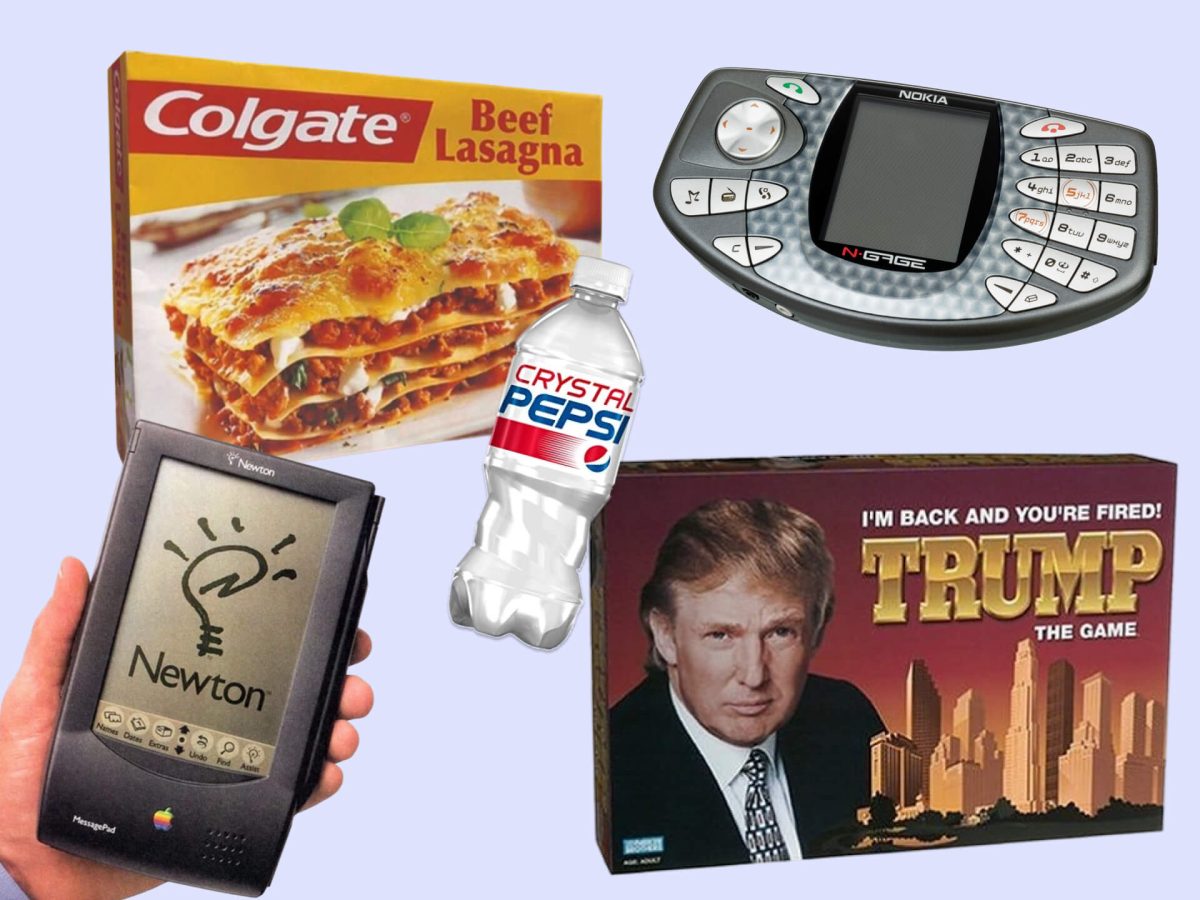
The Museum of Failure is the world’s largest collection of failed products and services. It’s a celebration of ideas that, though formed with the best of intentions, didn’t quite pan out. It’s easy to sit there and poke fun at these, and admittedly, some of them are pretty funny—take Donald Trump: The Board Game as an example.
But that’s not why I love this museum. I love this museum because it doesn’t brush failure under the carpet. Instead of shaming the designers who worked on these projects, it uses their failures as a way for us all to learn. Having an appreciation of what the designer was trying to do and understanding why they failed helps to improve future ideas.
Not every idea is a winner
Failure really is life’s best teacher, and we can learn a lot from the exhibits on offer. Here are a few of my favorites.
Nokia’s N-Gage taught us that whilst mobile gaming was important to consumers, getting a full console-like experience wasn’t what they wanted. It became clear that more simple games with straightforward controls was the way forward for mobile. Ergonomics should never be sacrificed for power.
Colgate introduced a line of frozen dinners in the 1980s. As you can imagine, the minty-fresh image of Colgate didn’t exactly lend itself to beef lasagna. Colgate’s foray into frozen ready meals teaches us a valuable lesson, though: there’s only so far you can stretch one brand. Colgate is a great brand, no doubt, but going from dental hygiene to beef is just one leap too far for most consumers.
Another much more mainstream example is Blockbuster’s video rental service. Blockbuster did tremendously well in the rental market up until the early 00’s, but they were very suddenly knocked off their perch, and this was thanks to digital distribution services like Netflix. Blockbuster didn’t innovate, and that was their undoing—a really important case study for how you need to adapt with the changing needs of your users.
Embracing ‘positive’ failure
Failure really is an interesting word. In the creative industries I think we’re a bit more open about our failures… But it can still be a contentious topic. Bosses and managers generally don’t want to be associated with failure, and we’re trained by society to give negative connotations to the word. Edward de Bono is a famous psychologist and business consultant. He does a lot of teaching around attitudes to failure, and de Bono makes this really interesting point: that there’s no single word in the English language to articulate a positive failure.
Take the classic definition of success: we have a goal, we get there, everyone’s happy, and there are good outcomes. Then there’s the classic definition of failure, when we don’t meet the goal for whatever reason. Traditionally, this is viewed as being a bad outcome. But then what if we meet the goal, but that goal wasn’t worth meeting in the first place? We’ve invested loads of time and energy for no gain. By definition, it’s a success, but a negative one.
On the other hand what if we deliberately pivoted, deciding the goal wasn’t worth meeting? Maybe we called the project off or changed the outcome entirely. In this case, we fall short of the original goal, but we still got something valuable from the journey. And we saved a load of time and money. By definition, that’s a failure, but it’s a positive one.
A positive failure can be tremendously valuable. From the process of failing, we can learn so much, and in the long term, that helps us to get to the right place. This might be learning what our users actually want or identifying pitfalls to avoid in later projects. In language, we don’t have a nice, fluffy word for this notion. We just have “failure,” and there’s still a real sense of shame associated to that word in so many organizations. Now I’m not clever enough to invent a new word, so I’ll just settle for “positive failure” and trying to change people’s perceptions towards it.
Test ideas with users early
I’d love to say that every project we’ve ever worked on knocked it out of the park. But that wouldn’t be true. We’ve worked on loads of concepts that just didn’t quite come together. Oftentimes during the design process we’ll spend some time working up a concept that we’re all pretty happy with. It’s when we start user testing our design and prototypes that we may get an inkling of the problems. A feature or a design we think is a great idea may go down like a lead balloon with the audience.
Naturally, this is never what we want to hear. Ideally everything we design would be perfect. But in the long run, this is a helpful outcome. We fail quickly, learn from what we did wrong, and pivot in these early stages when there’s still time to do so. We like to think of these scenarios as ‘positive’ failures.
If we had plowed ahead and built the thing anyway, we’d have technically succeeded delivering the work, but what would have been the point? We’d have spent a lot of time and money making something that users wouldn’t have cared about. The value of these types of failures is better understanding of what users value.
We can take these learnings forward into future concepts, delivering something more in line with what people actually want.
Share user feedback with your team
If we keep everyone informed about our failures, nobody has an excuse for making the same mistakes again. When we all know what doesn’t succeed, we can eliminate those options from future conversations.
This means we can be more focused on designing what works. When working in a product team, make sure you’re sharing user testing results and user feedback with everyone – even if it’s negative. And call back to them, if it feels like we’re retreading those same failed paths again. We are creatures of habit, and it’s easy to slip into doing the same things repeatedly. That’s why it’s so good to have your memory jogged with past failures every now and again. The insight gained from our failures is useful to the whole team.
Experimentation breeds success
Techniques like rapid prototyping and user testing have allowed us to mitigate and control failure to such a point where experimentation is super profitable. There are entire industries like conversion rate optimisation (CRO), built on the principles of repeated testing and learning. These fields came about as we’ve recognised that it really can take several attempts for a design to eventually strike gold.
But to fail gracefully, it’s all about being prepared. When an airline company designs a new aircraft, they invest millions into special controlled environments to test their prototypes. These artificial environments allow for safe experimentation, but they sure aren’t cheap.
In our industry, we’re much luckier. We don’t need to build expensive wind tunnels in order to test our ideas. In fact, the tools we need are readily available and can be put live in just a few minutes. Here are some of our favourites :
- Google Analytics. The staple insights platform that helps us understand what people do on our sites.
- Userbrain. A user testing service allowing us to quickly see and hear what people think about the products we design.
- Fullstory. A behavioural analytics platform that lets us see, in detail, how people are using the site.
- Wingify. An AB testing platform with AI features that allows us to easily experiment with different versions of a design.
I love this industry because, over any other, we have the capability to test, experiment, and fail without fear.
In summary, don’t be afraid of failure. In the creative world, we sometimes need to fail a couple of times to get to where we need to be. Start talking to your teams about your positive failures, and what can be learned from them. Getting people over this irrational fear of failure moves us towards a more experimental culture—a culture where we can do much better, more useful work.

Chris Myhill
Co-founder, Design at Pixelfridge
Chris heads up the discovery and design elements of our process. With over 15 years of experience in UX design and digital strategy, he makes sure our sites deliver on both organisational and user needs. With a background in both user research and practical design, Chris is able to oversee the entire process and ensure we’re delivering the best solutions for our clients.
Related Insights

5 ideas for user research when you can’t talk to users
At times, getting direct access to your users can be tricky. In this article we discuss 5 ways to conduct audience research, even when you can’t talk to people.
30 Jun ‘20

Celebrating 5 years of Pixel Fridge!
We can't quite believe we are 5 years old.
02 Feb ‘24

Designing for the edge cases
A common mistake is to only plan for the perfect scenario. Great designs prepare for the unexpected, as well as the ideal.
17 Apr ‘20

Running a kick-ass kick-off workshop
You’ve got two hours and a room full of anxious, opinionated stakeholders. How do you get the information you need to kickstart your digital project?
07 May ‘20

The art of efficient prototyping
Prototypes are a digital designer’s most valued output. Building them efficiently has never been more important.
15 Nov ‘21